La Ferme de Wolphus à Zouafques

A crossroads
two thousand years in the making.

Long before it was a farm, Wolphus was already a place people passed through: an ancient crossroads, a medieval fief, a château swept away by war. The history of this estate is intertwined with that of Zouafques, in the heart of the Caps et Marais d’Opale regional park.

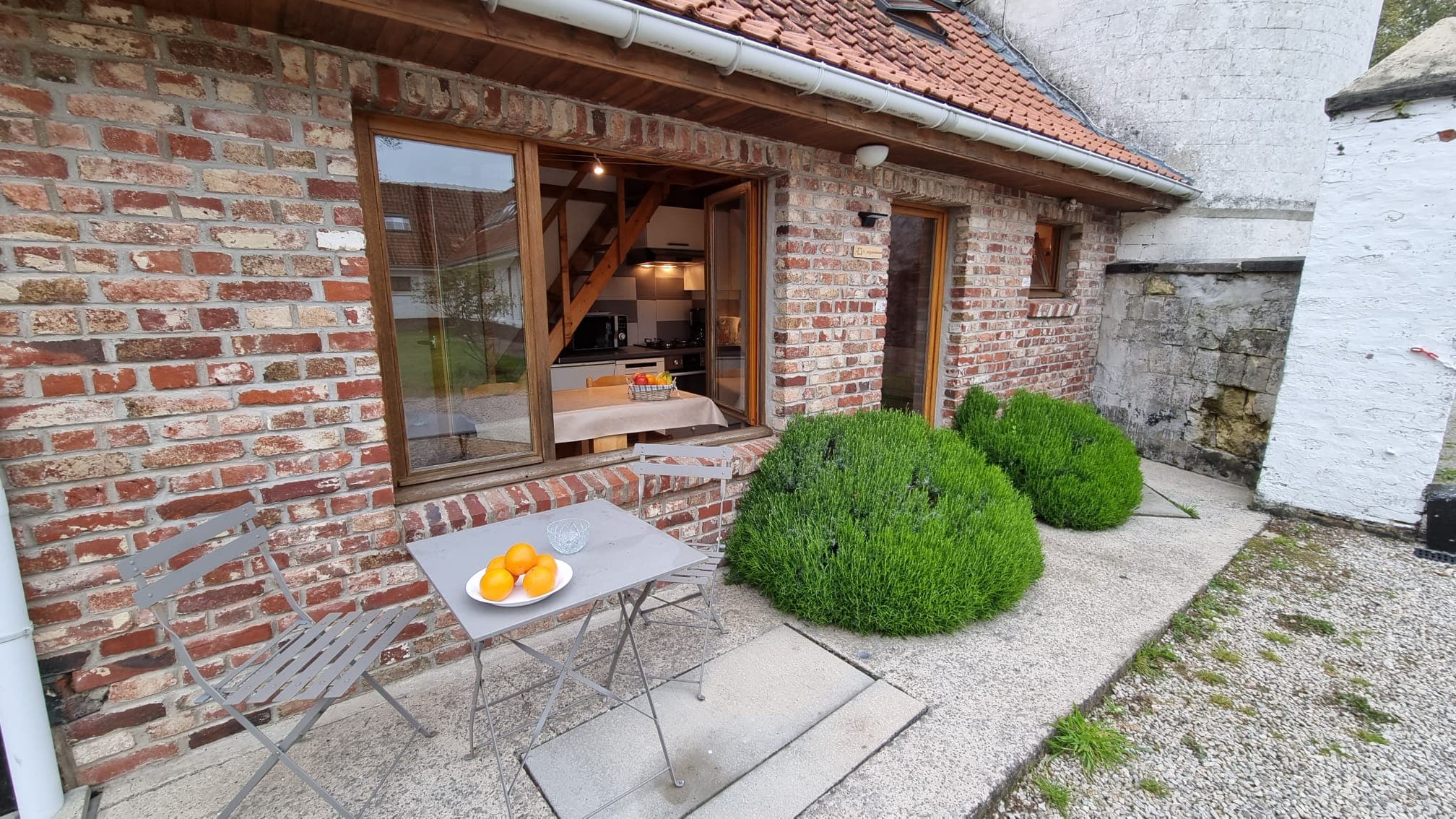
The property was converted for tourism in 1984. Since then, its 13 hectares of private meadows and forests, between Calais and Saint-Omer, have welcomed generations of holidaymakers in its independent cottages.

1st century

Antiquity:
a Gallo-Roman villa.

In Roman times, the site sat at a real crossroads, 700 metres north of the junction between the road from Thérouanne to Sangatte and the one from Boulogne to Cassel. The remains of a Gallo-Roman villa were uncovered here during excavations led by archaeologist J.-C. Routier, published in the Revue du Nord in 2011: a rectangular main building flanked by two corner towers, part of a Roman land division still visible in the landscape today.

Source: “Le site gallo-romain de Wolphus à Zouafques (62)”, Revue du Nord, 2011.
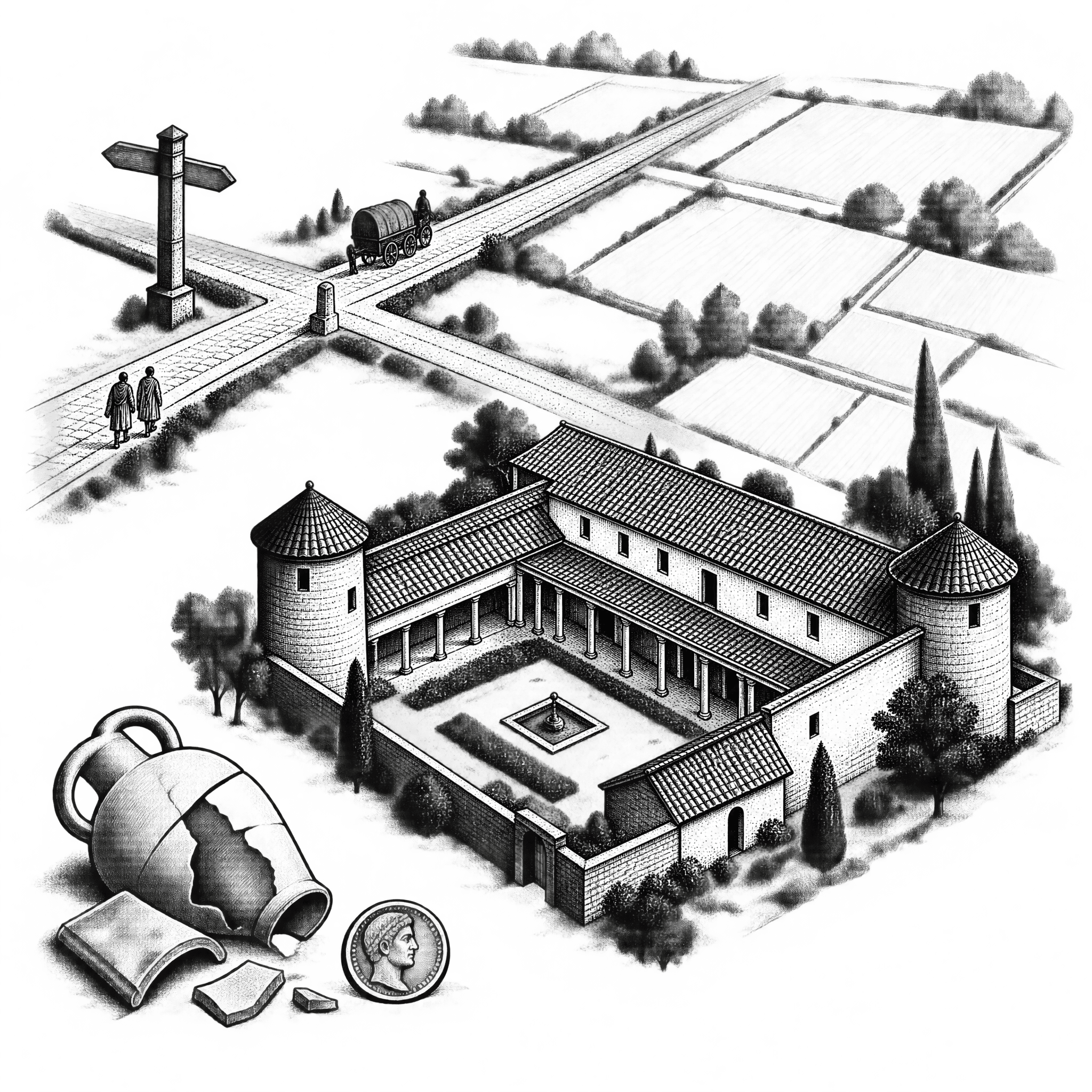
Illustration of the Gallo-Roman villa of Wolphus in antiquity
11th – 15th century

The Middle Ages:
a lord's fief.

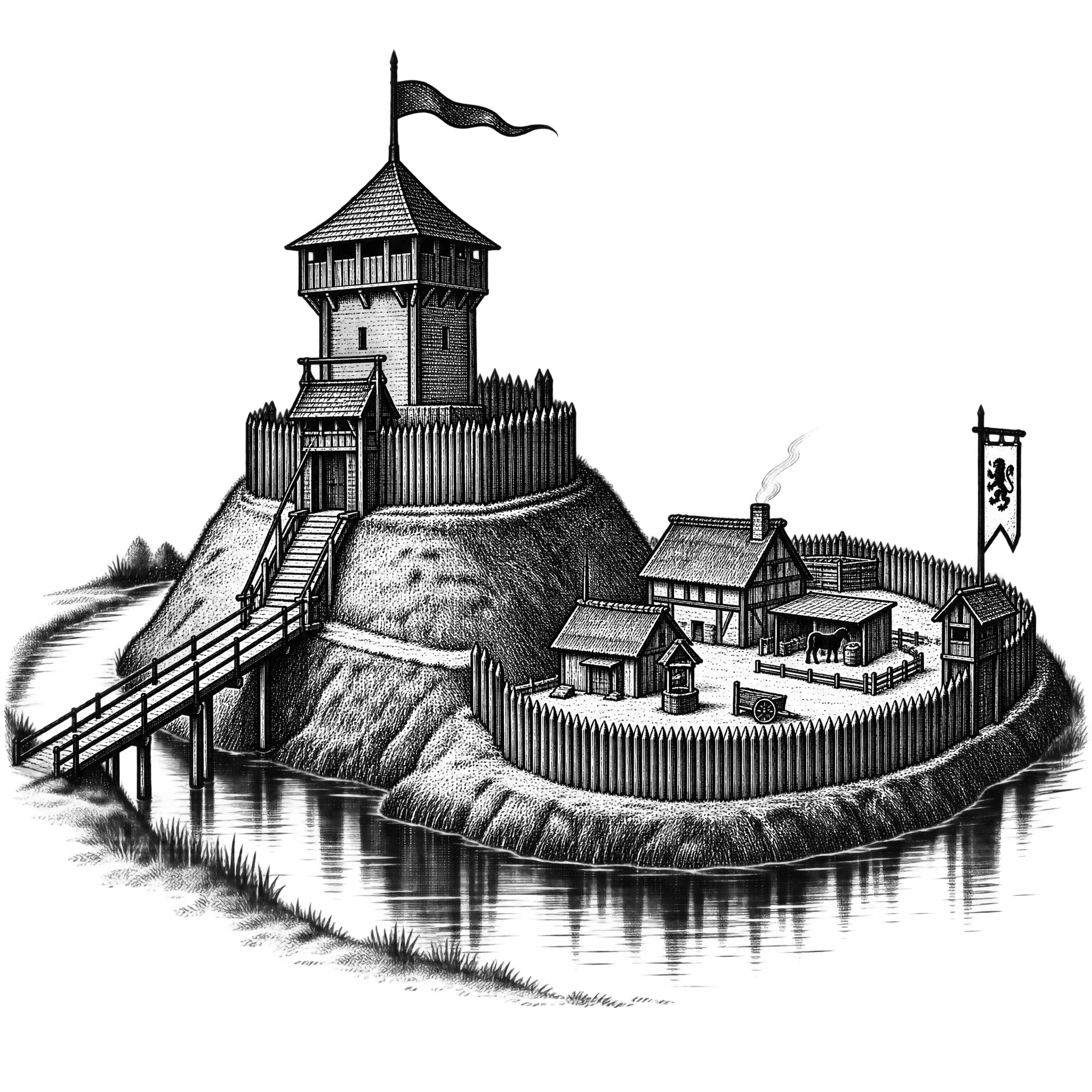
A few hundred metres from the ancient villa, a circular feudal motte surrounded by water-filled moats keeps the memory of another era: when Wolphus was the seat of a lord, vassal to the powerful castellany of Tournehem-sur-la-Hem, in the county of Saint-Omer. Two centuries later, Tournehem became a residence of the Dukes of Burgundy: Wolphus thus stood within the orbit of one of the region's most important powers.

Illustration of the feudal motte of Wolphus in the Middle Ages
18th century

The dovecote,
a witness to the 18th century.

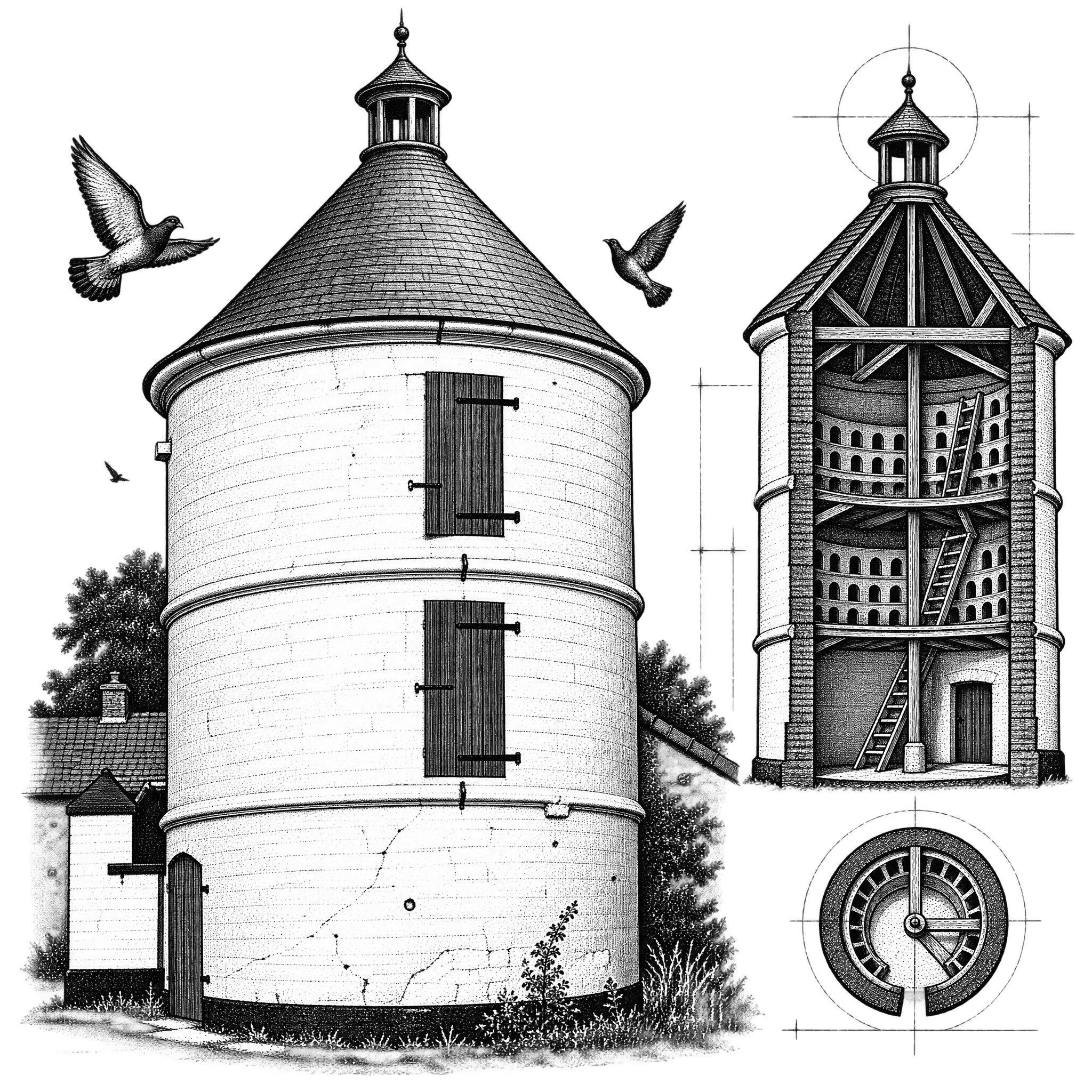
An 18th-century dovecote still stands in the estate's grounds, in Zouafques. Built of brick and stone, round in shape, it is topped with a slate dome roof and a small lantern at its summit. It once housed pigeons, considered an important source of food and manure for crops.

The round 18th-century dovecote of the Wolphus estate
19th – 20th century

A château
the war did not spare.

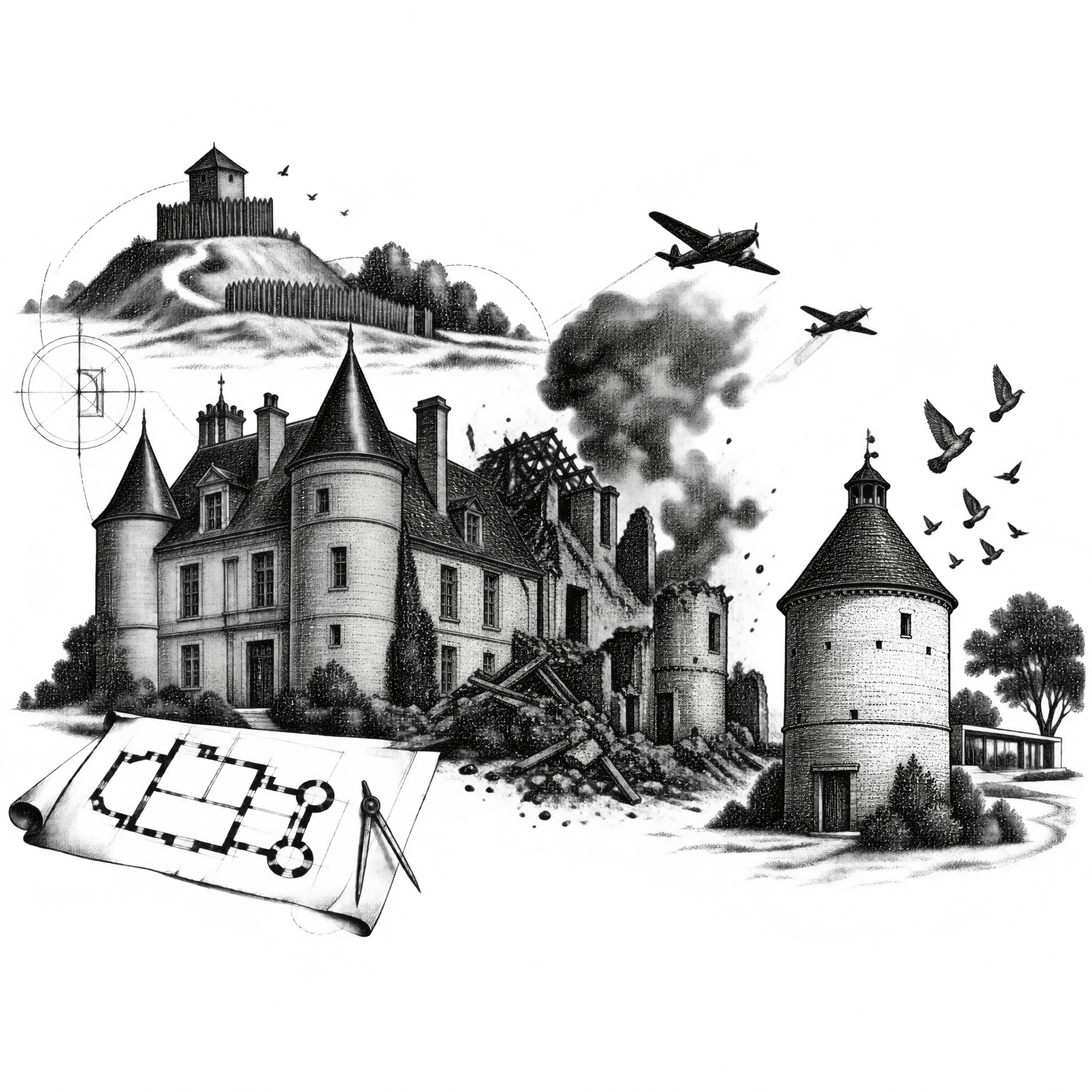
A château, which carried on this medieval site a few hundred metres from the old feudal motte, stood here for centuries. It did not survive the Second World War: destroyed in 1944, in the fighting of the Liberation, like many buildings in the region. From this long history, the 18th-century dovecote has come down to us intact — and since 1984, a new chapter has been written on this same estate.

Illustration of the Wolphus château destroyed during the Second World War
Two thousand years of history,
for a place that keeps bringing people together.

— Ferme de Wolphus today